Why Paint Keeps Failing on Your Concrete Patio
Tired of repainting a peeling concrete patio? Learn why paint fails, when coatings make sense, typical costs per square foot, and what to expect from resurfacing.
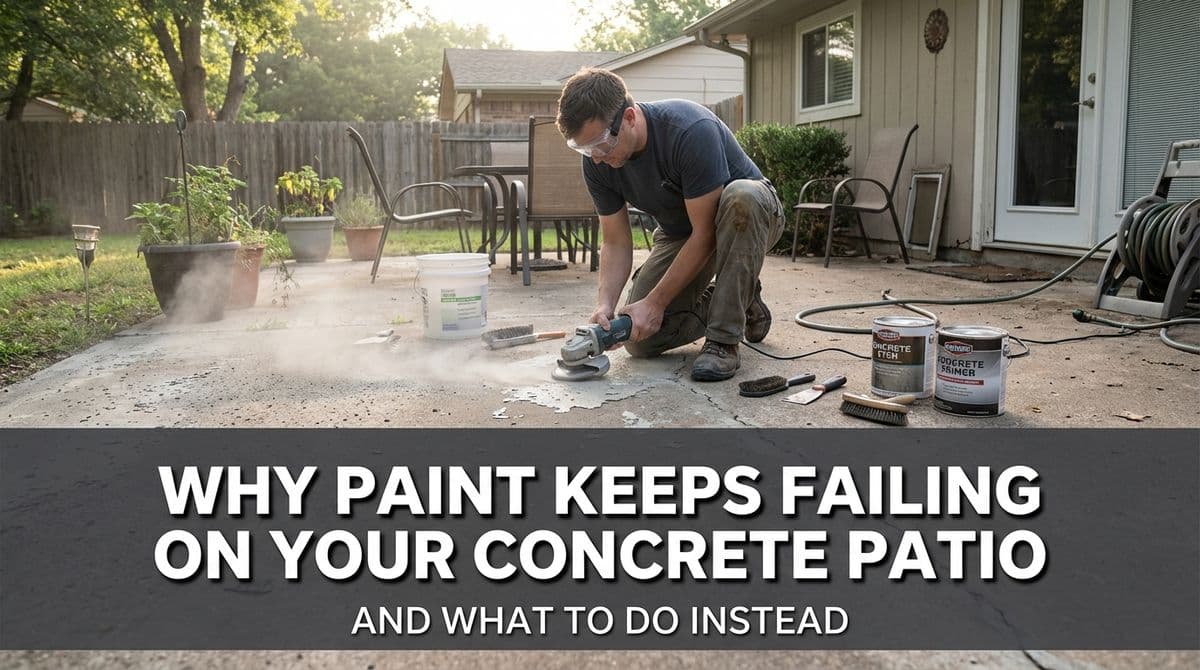
When Patio Paint Keeps Peeling Off
We recently got a call from a homeowner — we’ll call her Linda — who was tired of repainting her concrete patio. She told us she’d painted it several times over the years, but every year or two the same thing happened: peeling, flaking, and bare concrete showing through.
Her patio was about 250 square feet, just a step down from the back door. It was a perfect example of what we hear all the time: “We’ve painted and repainted this patio, but it just doesn’t hold up. What’s going on?”
Using Linda’s patio as our example, we’ll walk you through why paint keeps failing on concrete, what resurfacing and coatings actually involve, what spalling and cracks mean, when your slab is a good candidate, what it typically costs, and what to expect during the process.
Why Paint Fails on Concrete Patios
Concrete is not like drywall or wood. It’s a porous, constantly moving material. That’s a big reason paint doesn’t last long on patios, especially outdoors. When we were talking with Linda, we asked a few key questions that we ask every homeowner.
Moisture and Temperature Changes
Concrete absorbs moisture from the ground and from rain. Then the sun bakes it, and the surface expands and contracts. Regular paint forms a film on top of the concrete. When the concrete moves or moisture tries to escape, that paint film starts to:
- Bubble from trapped moisture
- Peel or flake where adhesion is weak
- Wear off in high-traffic areas
Over time, you get that patchy, chalky look that drove Linda to pick up the phone and call us.
Old Layers and Poor Surface Prep
Linda told us she’d “painted it several times.” That’s another clue. Layering more paint over failing paint usually makes things worse. The top coat might bond to the old paint, but if the bottom layer is already letting go, everything above it will eventually peel too.
On top of that, most patios were never profiled properly before they were first painted. Concrete needs to be mechanically roughened so coatings can bite into it. Without that profile, paint mostly sits on the surface instead of truly locking in.
What Grinding and Coating Actually Do
When Linda told us her patio was ground-level (just one step down), that was good news. We mentioned that our main grinder weighs about 800 pounds, so access is important. Once we can get equipment in, here’s what the process usually looks like.
Step 1: Mechanical Grinding
We use industrial grinders with diamond tooling to:
- Remove old paint or sealer down to clean concrete
- Open up the pores of the slab for better adhesion
- Level high spots and smooth minor surface imperfections
Grinding does two things at once for homeowners like Linda: it erases the failed coatings and creates the right surface profile for a long-lasting system.
Step 2: Repair, Then Professional Coatings
After grinding, we address cracks and defects before any coating goes down. Then we install a multi-layer coating system designed specifically for concrete — not just wall paint in a different can. The products we use are made for UV, weather, and foot traffic, so they move with the concrete instead of fighting against it.
What Are Spalling and Cracking?
On the phone, we asked Linda if she’d seen any cracking or what we call spalling. She’d noticed a small crack but no large chunks missing, which is ideal for coatings. Here’s what those terms mean for your patio.
Cracks
Hairline or small cracks are extremely common as concrete shrinks, moves, and settles. In most cases we can:
- Grind the area clean
- Fill the crack with repair materials
- Coat over it to blend with the rest of the surface
Larger structural cracks may need additional evaluation, but they don’t always rule out coatings.
Spalling
Spalling is when the surface layer of the concrete breaks off in flakes or chunks. This can be caused by freeze–thaw cycles, poor concrete mix, or previous surface damage. Light spalling can often be repaired during prep. Heavy spalling, where big areas are crumbling, can make coatings more difficult or sometimes not cost-effective.
Is Your Patio a Good Candidate for Coatings?
When we talked through Linda’s patio, we quickly realized it checked most of the boxes we look for:
- Concrete slab is solid and not moving underfoot
- Only minor cracking
- No major spalling or crumbling
- Reasonable access for equipment (ground-level, close to the house)
If your patio is similar, you’re probably a good candidate for resurfacing instead of ripping everything out and pouring new concrete. When things aren’t a good fit is when the slab is seriously heaving, sinking, or falling apart. In those cases, repairs or replacement may come first.
Typical Cost per Square Foot
For Linda’s 250-square-foot patio, we estimated in the $8–$11 per square foot range. That’s the same ballpark we give most homeowners for a full grind-and-coat system with high-quality materials.
What affects where you land in that range?
- How many layers of old paint or sealer need to be removed
- Amount of cracking or spalling that needs repair
- Access issues that make equipment setup harder
- Any custom color or texture choices
For planning purposes, many homeowners take their patio square footage and multiply by $8–$11 to get a rough idea, then we refine that after an in-person visit and photos.
What to Expect During the Process
When Linda invited us to stop by and take pictures, we walked her through what would likely happen if she moved forward. The basic experience is similar for most patios.
Day-by-Day Overview
- Site visit and estimate: We inspect the slab, take moisture and condition into account, and explain options.
- Prep day: We bring in grinders, set up dust control, grind off old coatings, and handle crack and surface repairs.
- Coating day: We apply the base coat, decorative layer (if chosen), and topcoat.
- Cure time: You can usually walk on it within 24 hours and bring furniture back in a few days, depending on the system and weather.
Noise and some dust are part of the process, but with modern vacuum systems and good housekeeping, we keep things as tidy as possible. We also work around pets and gates — in Linda’s case, that meant making sure her friendly puppy stayed safely inside while we were in the backyard.
When You’re Ready to Stop Repainting
If you’re in the same spot Linda was — repainting every couple of years and watching it peel — it’s usually a sign that the problem isn’t the paint brand; it’s the system. Proper grinding, repair, and professional concrete coatings can give you a surface that looks great and holds up far longer than another layer of paint.
Even if you’re just in the “rough estimate” stage, we’re always happy to talk through your square footage, condition, and options so you know what to expect before anyone sets foot in your backyard.